

What to Put on Your Wishlist: 6 Strategies to Keep Your Gift List Full Year-Round
You know that moment when someone asks what you'd like for your birthday, and your mind goes completely blank? Or when you finally remember that item you wanted, but it's weeks after the occasion has passed? The problem isn't that you don't want anything — it's that you haven't built a system for capturing gift ideas when they occur to you naturally throughout the year.
Most people approach wishlists reactively, scrambling to populate them right before an event. But the most useful wishlists are built proactively, capturing desires and needs as they emerge in daily life. When you see something you admire, consider purchasing something but hesitate, or discover a product that solves a problem you have, that's the moment to add it to your list — not three weeks later when someone asks what you want.
This article walks through six practical strategies for maintaining a wishlist that actually reflects what you want. These aren't about listing random products; they're about developing habits that ensure your personal wishlist stays current, diverse, and genuinely useful for the people who care about giving you thoughtful gifts. Whether you're building a wishlist for upcoming gift-giving holidays or maintaining one year-round, these approaches will help you never face that "I don't know what I want" moment again.
Need a faster read? Check out our quick guide on how to always have gift ideas in your wishlist. It’s a short, practical roundup of ways to keep your wishlist full without overthinking it.
Quick Summary (TL;DR)
- Most wishlists stay empty for a reason: People create them reactively, right before birthdays or holidays, which leads to rushed choices and forgotten ideas.
- Build your wishlist proactively: Capture gift ideas as they naturally occur — when you admire something, almost buy it, or see a clever product someone else uses.
- Don’t self-edit: Add both practical and aspirational items without worrying about price. Gifts are often about the things you wouldn’t buy for yourself.
- Include experiences, not just things: Add classes, trips, events, and memberships to make your wishlist reflect your lifestyle and values.
- Keep it organized and current: Regularly review, update, and categorize your list so gift-givers can easily find ideas that fit their budget and relationship with you.
- Use modern wishlist tools: Platforms with multi-retailer support, privacy controls, and gift tracking make it easy to maintain a dynamic, useful wishlist all year long.
- Good wishlist habits inspire better gifting: Keeping your own list organized helps you remember what others want too — strengthening connections and reducing waste.
Why Most Wishlists Stay Empty (and How This Costs You)
The average person creates a wishlist only when prompted — usually days before their birthday or during the holiday season when relatives start asking questions. By then, the pressure to "think of something" makes the process feel more like a chore than a helpful tool. You end up either leaving it sparse or adding items that don't truly excite you, just to have something listed.
This reactive approach creates several problems. First, you miss opportunities throughout the year when you naturally encounter items worth wanting. That kitchen tool you researched for twenty minutes? Forgotten by December. The book your colleague recommended? Lost in the shuffle of daily life. Second, last-minute wishlist building often results in generic choices that don't reflect your actual preferences, leading to gifts that miss the mark.
The alternative is building wishlist maintenance into your routine — not as a separate task, but as a natural extension of how you already browse, shop, and experience the world. When you develop this habit, your wishlist becomes a living document that captures your evolving interests, practical needs, and genuine wants. This benefits both you and your gift-givers, who appreciate having clear direction rather than guessing what you might like.
Strategy 1: Capture Your "Someday" Purchases
We all practice a form of self-restraint when shopping. You research products, read reviews, add items to cart, then close the browser without buying. You justify this as financial responsibility — and often it is. But these "almost purchases" represent something valuable: items you've already vetted and genuinely want, just not enough to buy for yourself right now.
Your wishlist should capture these moments. That premium coffee grinder you spent an evening researching? Add it. The cashmere sweater you tried on but couldn't justify at full price? Perfect wishlist material. The upgraded version of something you already own but wish worked better? Absolutely worth noting. These items already passed your personal quality threshold; you just decided they weren't urgent enough for immediate purchase.
This approach works because it eliminates the "what do I even want?" paralysis. You're not inventing desires from scratch — you're documenting wants you've already identified during normal life. Someone else buying that item for you transforms it from an indulgence you'd never prioritize into a gift you'll genuinely appreciate and use. The key is capturing these items in the moment, before you forget the specific product or model that caught your interest.
Tools like Giftetic — a digital wishlist platform make this effortless — you can save items from any website or note down things you find in physical stores, keeping everything organized in one place instead of scattered across different retailers’ lists.
Strategy 2: Turn Everyday Window Shopping Into Wishlist Gold
Much of modern life involves encountering products without intending to shop. You scroll social media and see someone's new kitchen setup. A friend shows up wearing a jacket you admire. You notice a colleague's desk organizer that's far superior to your chaotic system. These moments are market research conducted by people whose taste you respect.
The mistake most people make is appreciating these items mentally but never documenting them. Three months later, when building a wishlist, you remember thinking "I'd love something like that" but can't recall what "that" actually was. The solution is treating these observations as wishlist opportunities. When you admire something someone owns, ask them about it (most people love sharing recommendations). Search for it immediately and add it to your list while the specific product is fresh in your mind.
This strategy is particularly effective because it captures items you've essentially seen "in use" rather than just in marketing photos. You already know that messenger bag looks good in real life, holds a laptop comfortably, and ages well — your coworker's been using it for two years. That's more valuable information than any product review can provide, and it makes for much more confident wishlist additions.
The browsing-to-wishlist pipeline should be frictionless. Whether you're shopping in physical stores or online, have a quick method for capturing items. For digital browsing, platforms that let you submit wishlist items from multiple retailers solve the problem of juggling separate wishlists across different stores, keeping everything you want visible in one organized space.
Strategy 3: Don't Self-Edit Based on Price or Practicality
One of the biggest mistakes people make when building wishlists is self-censoring. They think "that's too expensive for anyone to buy" or "I don't really need that, so I shouldn't list it." This defeats the entire purpose of having a wishlist. The function of a gift is often to provide something you wouldn't buy yourself — either because it exceeds your budget or because it feels indulgent rather than necessary.
Consider that expensive item you've wanted for years but can't justify purchasing. Your family might surprise you by pooling resources for a significant birthday or holiday. Or that luxury version of something practical — the high-end headphones when your current ones work fine, the designer version of something you own in generic form. These items make excellent gifts precisely because they represent upgrades you'd never prioritize for yourself.
Include items across a wide price spectrum on your wishlist. Some people have modest budgets and want to give something meaningful in the $20-40 range. Others might be looking for that special milestone gift and have set aside a larger amount. By offering options at different price points, you make it easier for everyone to find something appropriate for their budget and the occasion.
This is where visibility controls for individual wishlist items become valuable. You might want to share that expensive professional camera lens with close family who might contribute toward it, while keeping smaller everyday items visible to friends and colleagues. Different relationships call for different gift price ranges, and your wishlist can accommodate that naturally.
Strategy 4: Build a Habit of Capturing Inspiration in the Moment
The difference between people who always have gift ideas and those who don't usually comes down to a single habit: capturing wants when they occur rather than trying to remember them later. You're scrolling through a newsletter and see an interesting book. A podcast mentions a documentary you want to watch. Someone's social media post features a travel accessory that would solve a problem you have on trips.
Each of these moments represents a potential wishlist item, but only if you act immediately. The human brain is notoriously poor at remembering to remember things. Thinking "I should add that to my wishlist later" almost guarantees you'll forget the specific item within hours. The solution is reducing the friction of capture to nearly zero — when you encounter something worth wanting, adding it to your wishlist should take less than thirty seconds.
This means having your wishlist accessible wherever you are: on your phone while commuting, on your computer while working, even when someone mentions something interesting during conversation. The moment you think "I'd like that," you capture it. Over time, this builds a remarkably complete picture of your interests without ever sitting down to "think of gift ideas" artificially.
A modern wishlist app, such as Giftetic, is designed for this behavior, letting you quickly save items from any source and organize them later. The capture step shouldn’t require categorization or detailed notes — just get it onto your list while you’re thinking about it. You can refine and organize during periodic reviews, but the crucial moment is that initial save.
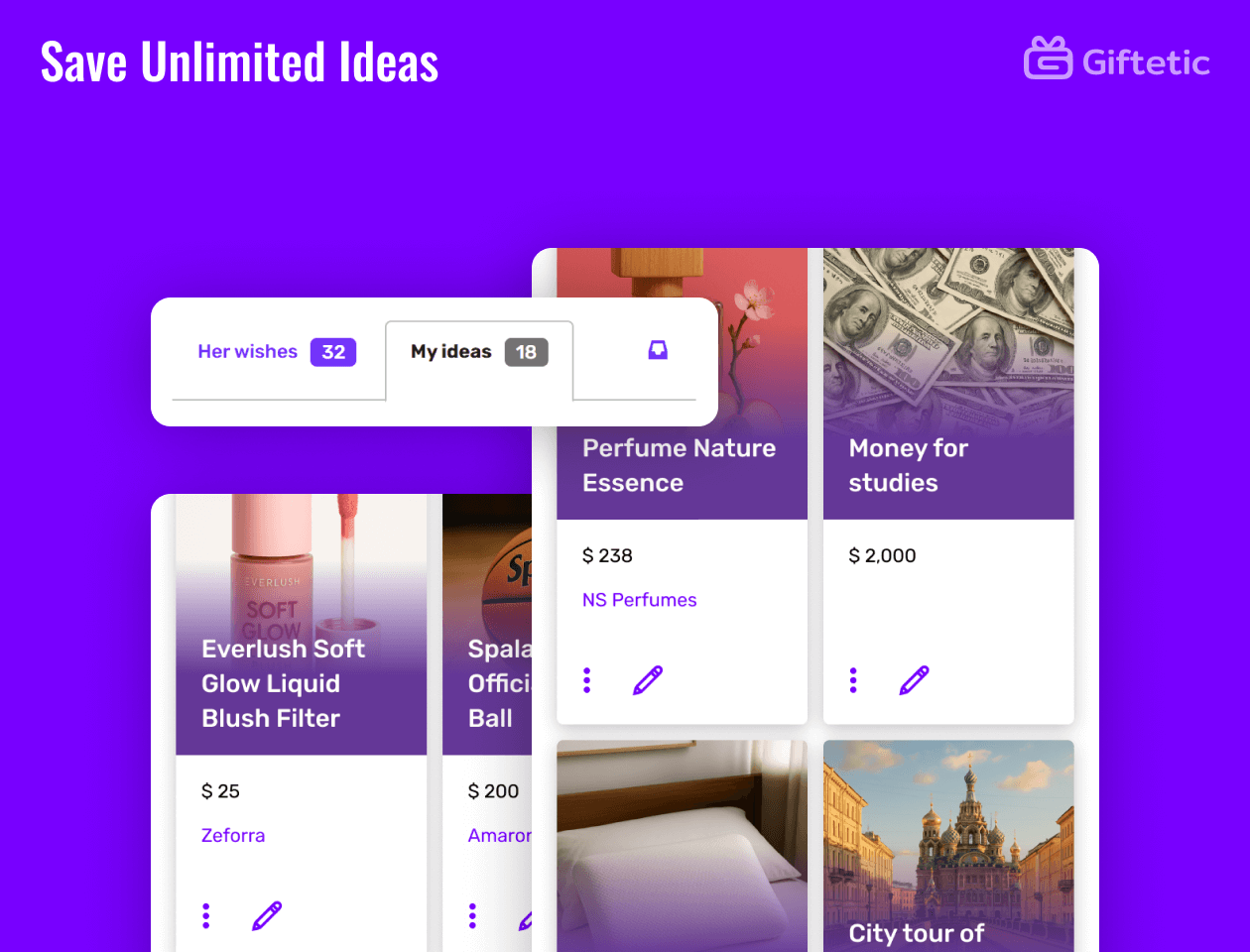
Inspiration Collections for Others
Save & Organize Gift Ideas in One Place
Giftetic Feature
Strategy 5: Think Beyond Objects — Experiences Make Exceptional Gifts
Physical products dominate most wishlists, but some of the most memorable and appreciated gifts are experiences. The challenge is that experiences feel harder to add to a wishlist — you can't just paste a product link. But many experiences are purchasable in specific, concrete ways that work perfectly well on gift lists.
Consider classes or courses you'd like to take but keep postponing. A cooking class focusing on a cuisine you love. An online course for that skill you've wanted to develop. A photography workshop. These often come with specific providers, price points, and registration processes — they're just as "giftable" as physical items, and often more meaningful because they represent personal growth or new capabilities.
Travel experiences work similarly. Rather than vaguely wishing for "a trip somewhere nice," identify specific experiences: a weekend at a particular bed and breakfast, tickets to a festival or event in another city, a guided tour you've researched. Hotel gift cards, airline vouchers, or contributions toward a specific destination you're planning all translate abstract travel desires into concrete wishlist items.
The key is specificity. "I'd love to travel more" doesn't help gift-givers. "I'm planning a trip to Portland next spring and would love contributions toward the boutique hotel I've picked out" gives people a clear way to participate in something you're excited about. Group activities belong here too — concert tickets for you and a friend, a cooking class you'd attend with your partner, memberships to museums or gardens you'd visit together. These gifts create experiences that extend beyond the initial giving moment.
Strategy 6: Include Practical Contributions When Appropriate
There's sometimes awkwardness around listing gift cards or cash contributions on a wishlist, as if it's less thoughtful than requesting specific products. But in certain contexts, these options are actually the most useful choice for both giver and recipient — and there's no reason to avoid them out of misplaced etiquette concerns.
If you're saving toward something significant — a major purchase, a specific trip, an investment in equipment for a hobby—gift cards or contributions toward that goal allow people to participate in something meaningful. The difference between a generic "give me money" request and a thoughtful contribution is context and specificity. "Contributing toward my Japan trip next fall" or "Gift cards toward the camera equipment I'm slowly assembling" gives gifts purpose and allows givers to feel connected to your larger goals.
Store-specific gift cards work well for retailers you frequently use. If you regularly shop at a particular bookstore, home goods store, or online retailer, a gift card there is as useful as any specific item you might list from that store — with the added benefit of letting you choose exactly what you need at the time. This is particularly valuable for things where personal preference matters intensely, like books, music, or home décor.
When adding these options to your personal wishlist or gift registry, include a note about how you plan to use it. This transforms what might feel like a generic request into something specific and personal. People want their gifts to be meaningful; giving them insight into what their contribution will enable — whether it's finally buying that professional standing desk or contributing to a milestone experience — helps them feel good about choosing that option.
Organizing Your Wishlist to Make Gift-Giving Easier
A well-populated wishlist is valuable, but an organized one is significantly more useful for the people shopping from it. When someone opens your wishlist, they shouldn't face a overwhelming wall of random items. Instead, thoughtful organization helps them quickly find appropriate gifts for their budget, your relationship, and the occasion.
Start with the basics: every item should include essential details. Sizes, colors, specific models — anything that eliminates guesswork for the purchaser. If you're adding clothing, note your sizes clearly. For tech products, specify which version or configuration you want. Include links to preferred retailers when possible, or at minimum, enough product information that someone can find the exact item you have in mind. The goal is removing any barrier between "I'll get them this" and successfully purchasing it.
Price diversity matters more than people often realize. Not everyone shopping from your wishlist has the same budget. Your partner might be looking for something significant for your birthday. A coworker might want to chip in for a group office gift. A cousin might be seeking something modest for the holidays. By including items ranging from $15 to $150 (or whatever ranges suit your situation), you accommodate all these scenarios rather than inadvertently pressuring people into a specific price bracket.
The most sophisticated organization addresses visibility appropriately for different relationships. Some items are suitable for anyone to see and purchase. Others might be more personal or intimate, appropriate only for close family or your partner. A few might be collaborative goals where you'd appreciate multiple people contributing. Platforms with granular privacy controls let you tailor what each person sees, ensuring your coworkers don't see the romantic gifts meant for your partner's eyes, while family can view the bigger-ticket items where pooling resources makes sense.
Seasonal organization helps too. As different gift-giving occasions approach throughout the year, having items loosely grouped by appropriateness — birthday-specific wants, holiday gifts, anniversary ideas, or milestone celebrations — helps gift-givers quickly orient themselves to what makes sense for the current occasion. This doesn't mean rigid categories, but rather gentle guidance that improves the shopping experience.
Maintaining Your Wishlist as Your Life Changes
The final piece of keeping a useful wishlist is treating it as a living document rather than a static list. Your interests evolve, your needs change, you acquire things independently, or you simply lose interest in items you once wanted. A wishlist frozen in time stops being useful — both for you and for people shopping from it.
Schedule periodic reviews of your wishlist, perhaps quarterly or when major occasions approach. Remove items you've purchased yourself, gifts you've already received, or things you've simply lost interest in. This prevents the frustrating scenario where someone buys you something you already own or no longer want. Many people hesitate to remove items, worrying it might seem ungrateful if someone was planning to buy it, but an up-to-date wishlist serves everyone better than one cluttered with outdated wants.
Add new items regularly as you discover them through the strategies covered earlier. Your wishlist should grow and evolve naturally throughout the year, not just spike in activity before major gift-giving occasions. This continuous maintenance means that when someone does ask what you'd like, your list already reflects your current interests rather than requiring a last-minute scramble to populate it with relevant ideas.
Pay attention to what gets purchased from your list and what doesn't. If certain types of items consistently get selected while others languish, that's valuable information about what resonates with your gift-givers. It might mean adjusting your price ranges, providing more detail about certain categories, or reconsidering whether some items are truly right for gift-giving versus personal purchase.
Giftetic's approach to tracking gifts over time helps with this — when you can see patterns in what you've received and what remains on your list across multiple occasions, you develop a better sense of how to structure your wishlist for maximum usefulness. It's not about gaming the system to get specific things, but rather about understanding the gifting dynamics in your relationships and adapting accordingly.
Beyond Your Own List: Supporting Others' Gifting Success
An interesting benefit of maintaining your own wishlist well is that it often inspires you to be more thoughtful about others' wishlists too. When you experience how helpful it is to have someone work from your clearly expressed preferences rather than guessing, you naturally want to provide the same consideration when you're the gift-giver.
This creates a positive feedback loop in your relationships. As you become more intentional about maintaining your wishlist, you also become more attentive to saving gift ideas for others throughout the year. That casual conversation where your friend mentioned wanting to try a new hobby? Suddenly you're making a note of it rather than letting it slip away. You start collecting gift inspiration for the people you care about, building your own reference of what they've expressed interest in over time.
This reciprocal thoughtfulness is really what makes wishlist culture work. It's not about demanding specific gifts or taking the surprise out of giving. Rather, it's about creating clear channels of communication around wants and needs so that gifts — when they're given — have a much higher likelihood of being truly appreciated and used. The surprise can still exist in which item someone chooses, when they give it, or how they present it, but the core gift itself aligns with actual desires rather than hopeful guesses.
Tools that help you manage gifting relationships and preferences serve this purpose — keeping track of what matters to the people in your life so you can reciprocate their thoughtfulness when occasions arise. The investment you make in maintaining your own wishlist naturally extends into being a better gift-giver yourself.


Building the Wishlist Habit
The strategies outlined here all point toward a fundamental shift: treating your wishlist as an ongoing practice rather than an occasional task. It's the difference between frantically trying to think of gift ideas when someone asks versus having a curated collection of genuine wants already documented and organized.
Start with whichever strategy feels most natural to your routine. If you do a lot of online browsing, begin by capturing those "someday purchases" as you encounter them. If you frequently admire things others own, practice asking about those items and adding them to your list immediately. If you have big-ticket items you're saving toward, add those with clear context about your goals. The specific entry point matters less than building the habit of capture.
Over time, maintaining a wishlist becomes second nature — just another way you organize information about your preferences and interests. The benefits of maintaining a digital wishlist extend beyond just getting better gifts. It becomes a useful reference for your own future purchases, a way to track evolving interests, and a tool for communicating preferences clearly in your relationships.
The ultimate measure of success isn't having the longest or most expensive wishlist. It's never again facing that blank-mind moment when someone asks what you'd like, and knowing that the people who care about you have clear, current insight into what would genuinely bring you joy. That's the real value of these strategies — transforming wishlist maintenance from an uncomfortable obligation into a helpful tool that improves gift-giving experiences for everyone involved.
![A man sitting in a cozy wooden cabin wearing a festive Christmas sweater, thoughtfully using a stainless-steel laptop on a bright wooden desk — representing planning and organizing holiday gifts early with a digital wishlist on [APP_NAME] to save time and reduce Christmas stress.](/images/articles/blog/tips/17/why-creating-a-christmas-wishlist-early-saves-you-time-and-stress.jpg)

![Man opening a birthday gift box that explodes with sparks at a garden party — representing gifting mistakes that can damage relationships, featured in [APP_NAME]’s blog on common gift-giving errors and how to fix them.](/images/articles/blog/gifting-and-relationships/16/common-gifting-mistakes-that-damage-relationships-and-how-to-fix-them.jpg)

